

MARINE LONGHOUSE
| Location: | MIDCOAST MAINE |
| Project Size: | 3,000 S.F. |
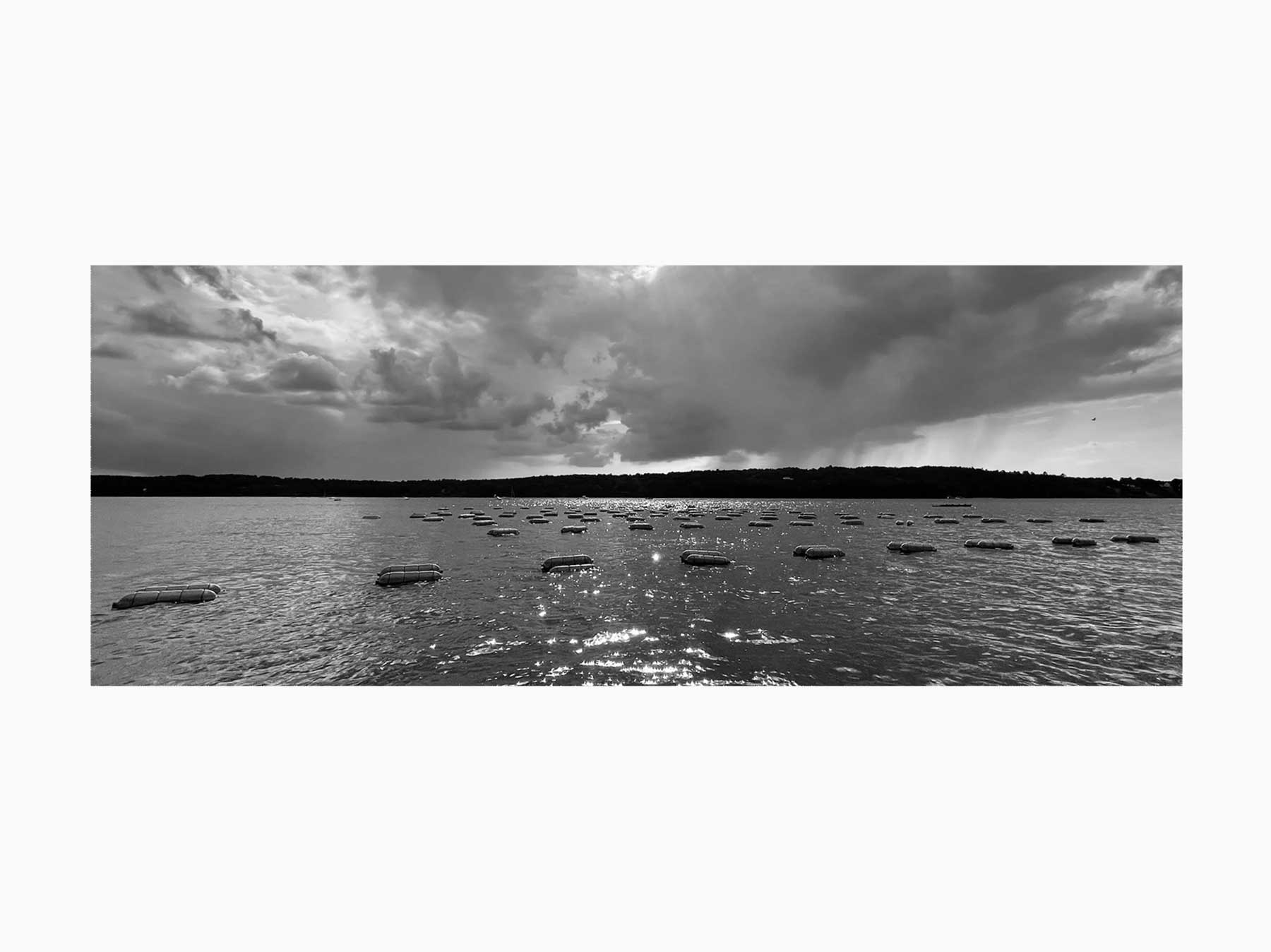
WORKING COASTAL INFRASTRUCTURE
The aim: To equip aquaculture cooperatives in coastal Maine with a proximate, compliant, multi-use facility housing processing, cold storage, training, research, and gathering, under one roof.
At present, few viable facilities adequately meet the critical requirements of small to mid-sized sea farms. Existing options are fragmented, driving farmers to multiple ad-hoc and distant sites for cleaning, processing, staging, and storage in unregulated and improvised spaces. The Marine Longhouse provides a direct response: a catalog-based, prefabricated building and systems that deliver a high-performance, multi-use, waterfront facility in a single deployable package—scalable and designed from the outset to be replicated along the working coast.
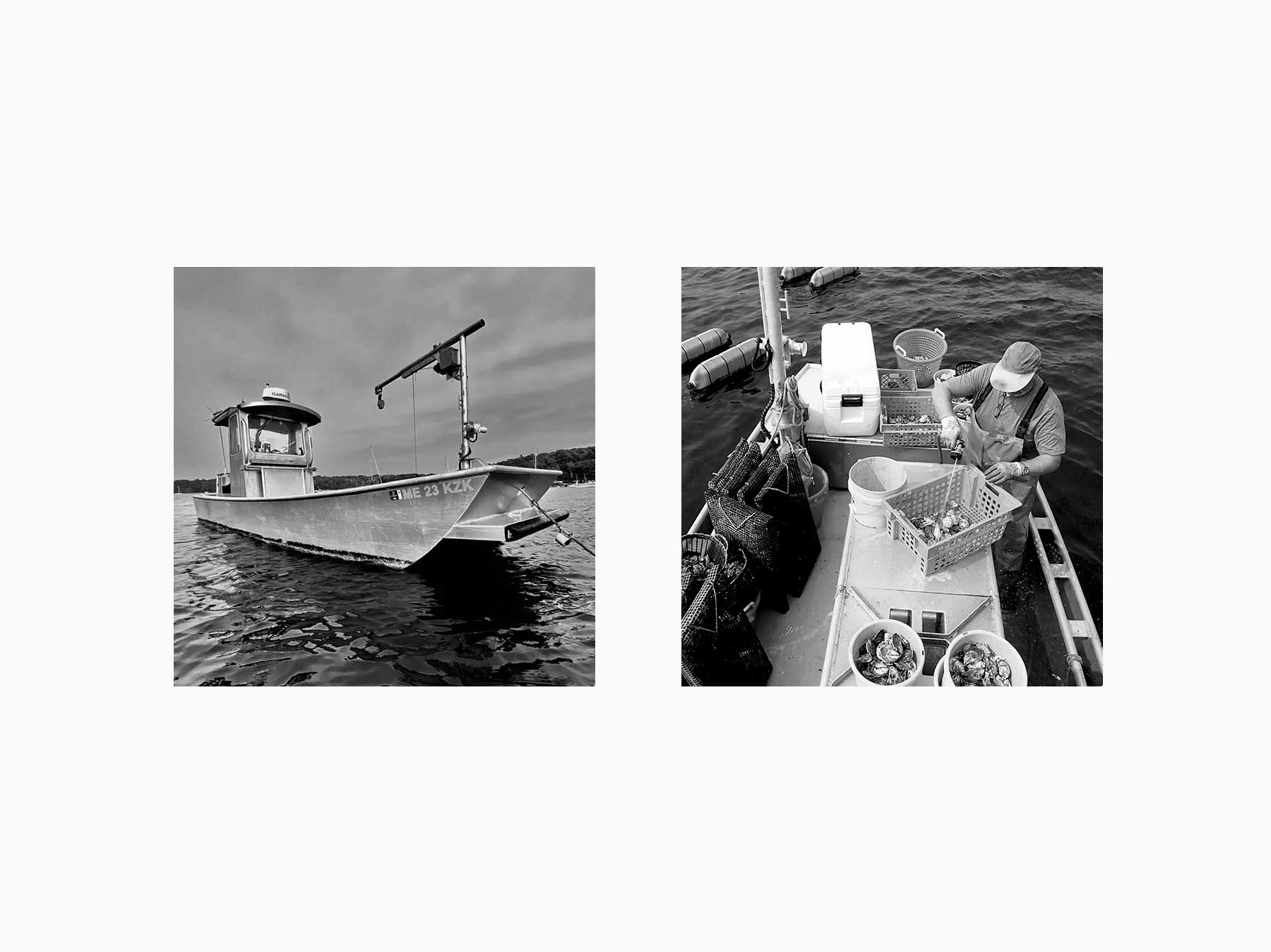
The Marine Longhouse serves a high-value segment of the economy who depend upon reliable onshore infrastructure and workforce development options. The provision of specialized space and equipment underpins robust training and workforce development programs, facilitating the transition of practical skills into employment opportunities. These initiatives support job creation, lower logistical costs, and mitigate operational risks for sea farmers pursuing business growth. Facility-users represent the operational backbone of Maine’s marine economy:
- Local purveyors of ocean products in need of processing bays, storage, and staging facilities.
- Local sea farmers in need of operational systems to help land more catch within state health guidelines.
- Local aquaculture initiatives and educational institutions in need of waterfront classrooms, meeting space, laboratories, and specialized training equipment.

SCALABLE, ADAPTABLE
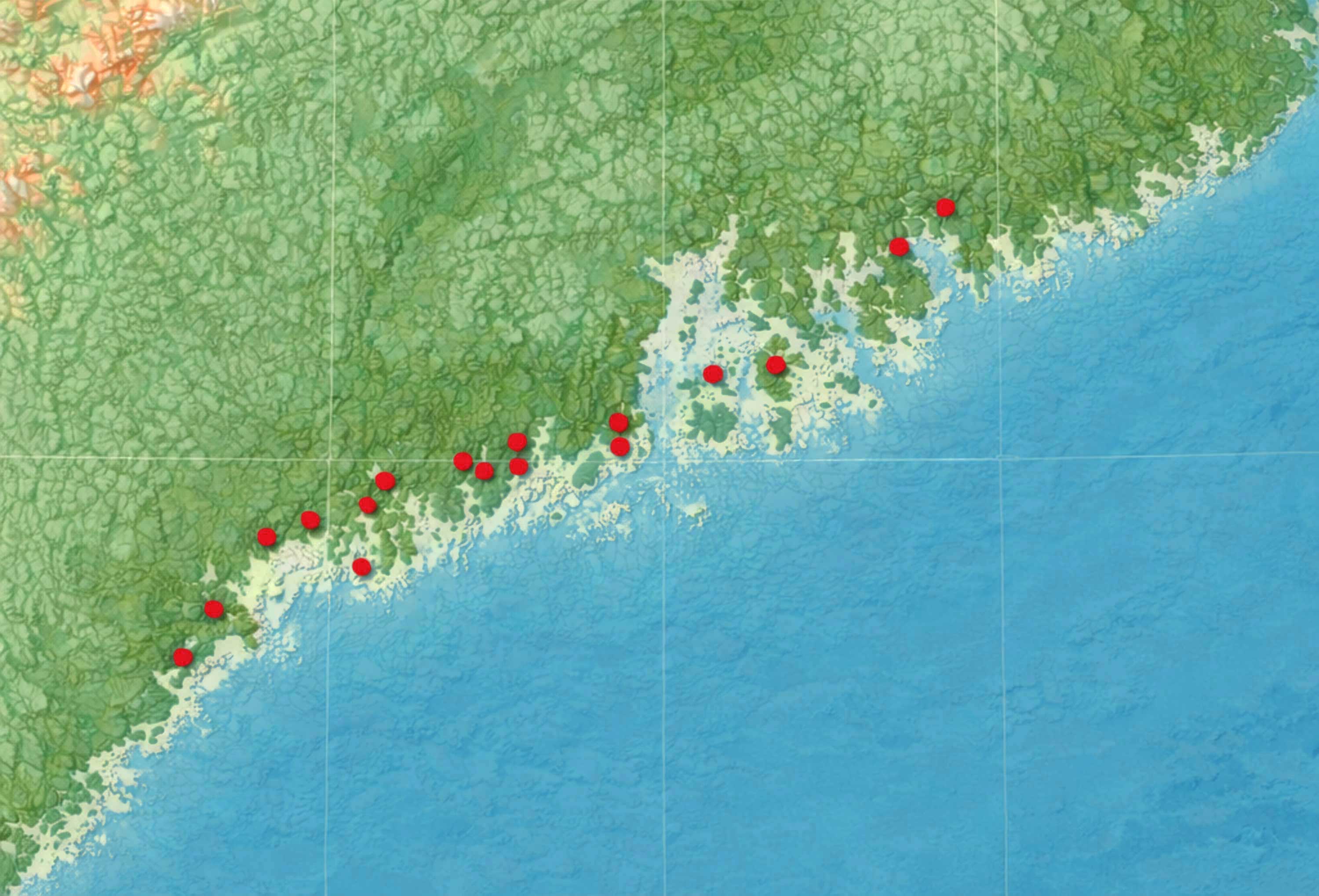
We envision this first Marine Longhouse as the working prototype for multiple, varied sites along the coast — each drawing from the same catalog, engineering documentation, and construction methodology. Subsequent deployments growing faster and less expensive as supply chain relationships, contractor familiarity, and permitting precedents accumulate. The Marine Longhouse has the ability to grow on its own site: additional bays, cold storage modules, or live-work units append without disrupting ongoing operations. It is, by design, evolving.
SITE AND SYSTEM
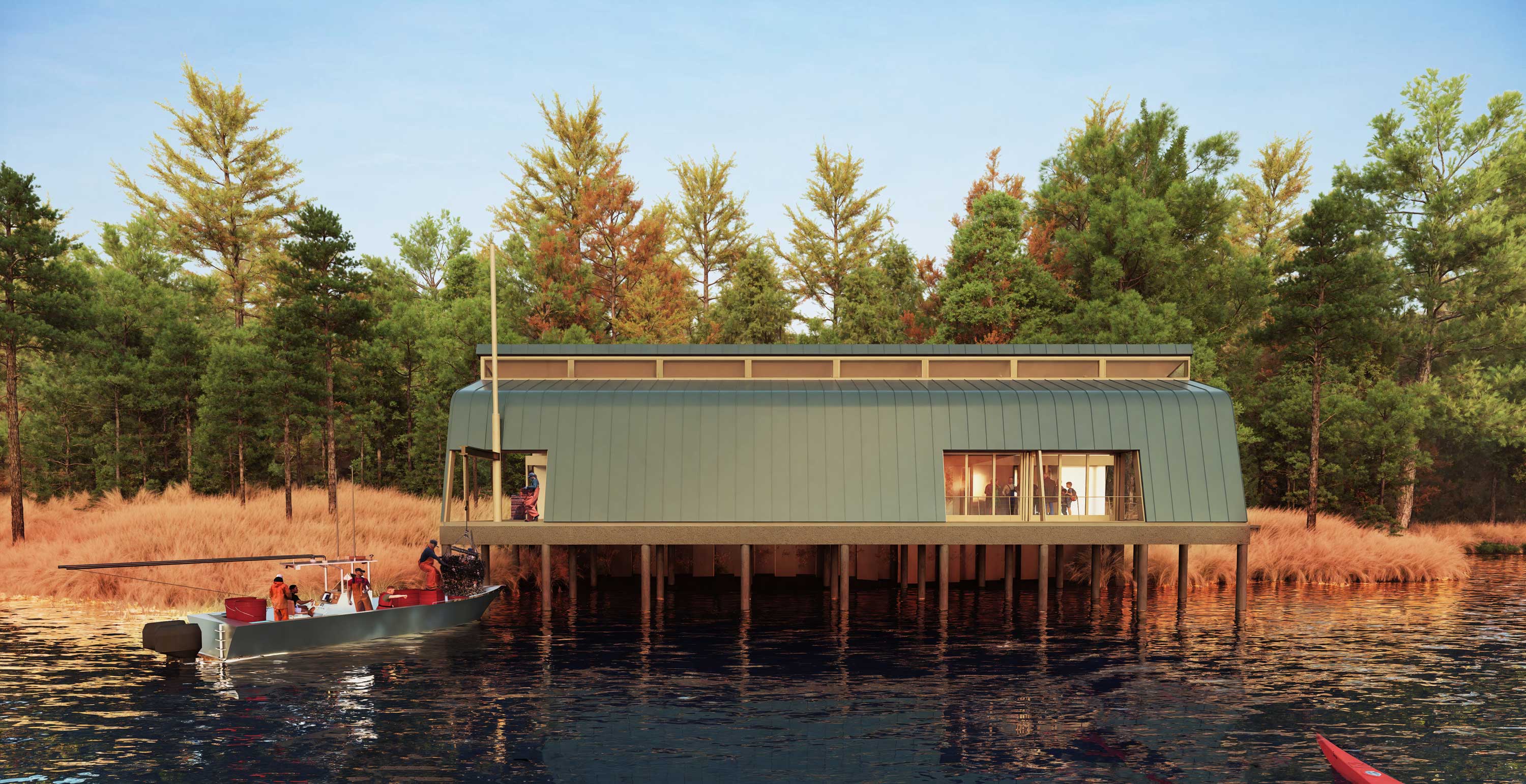
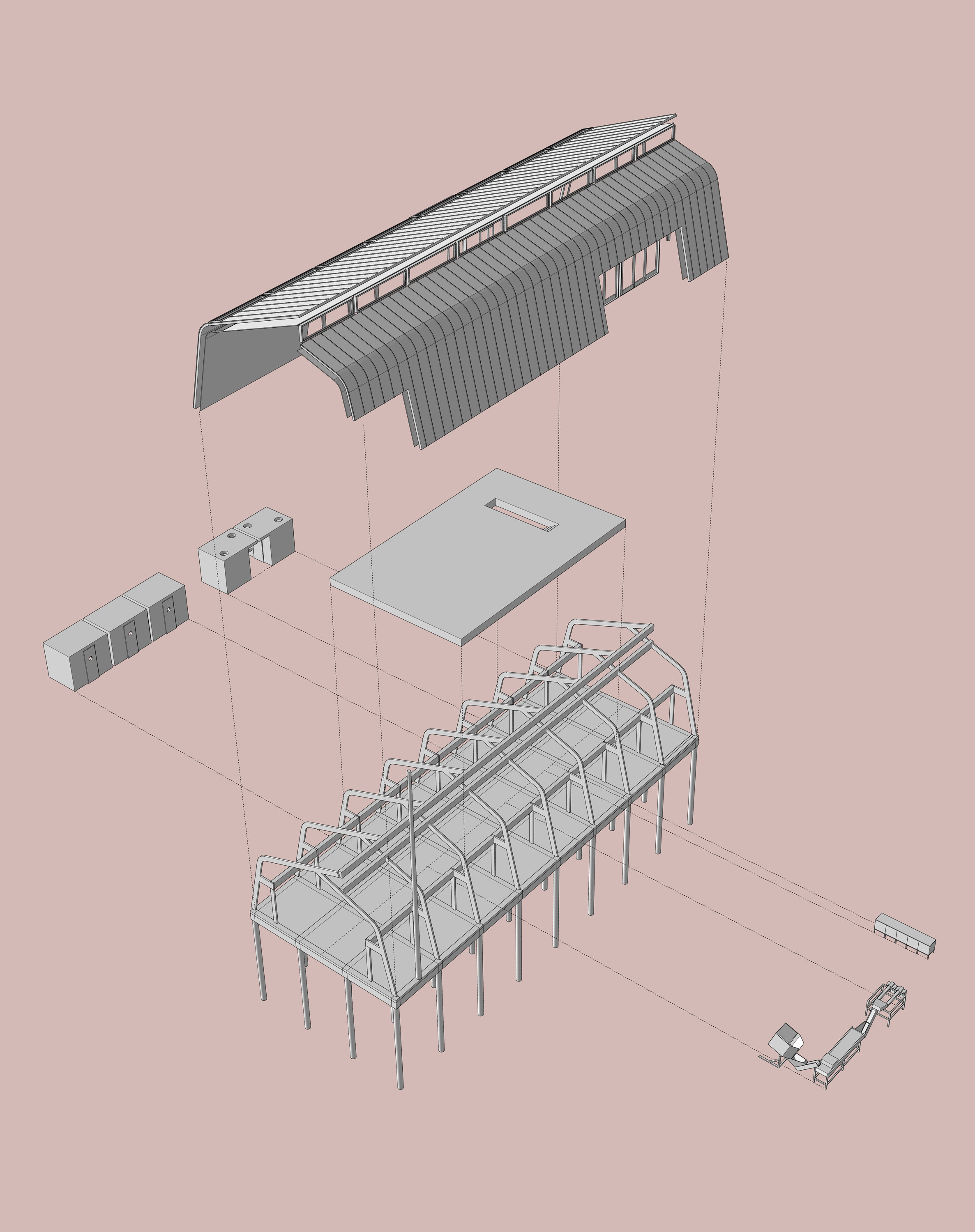
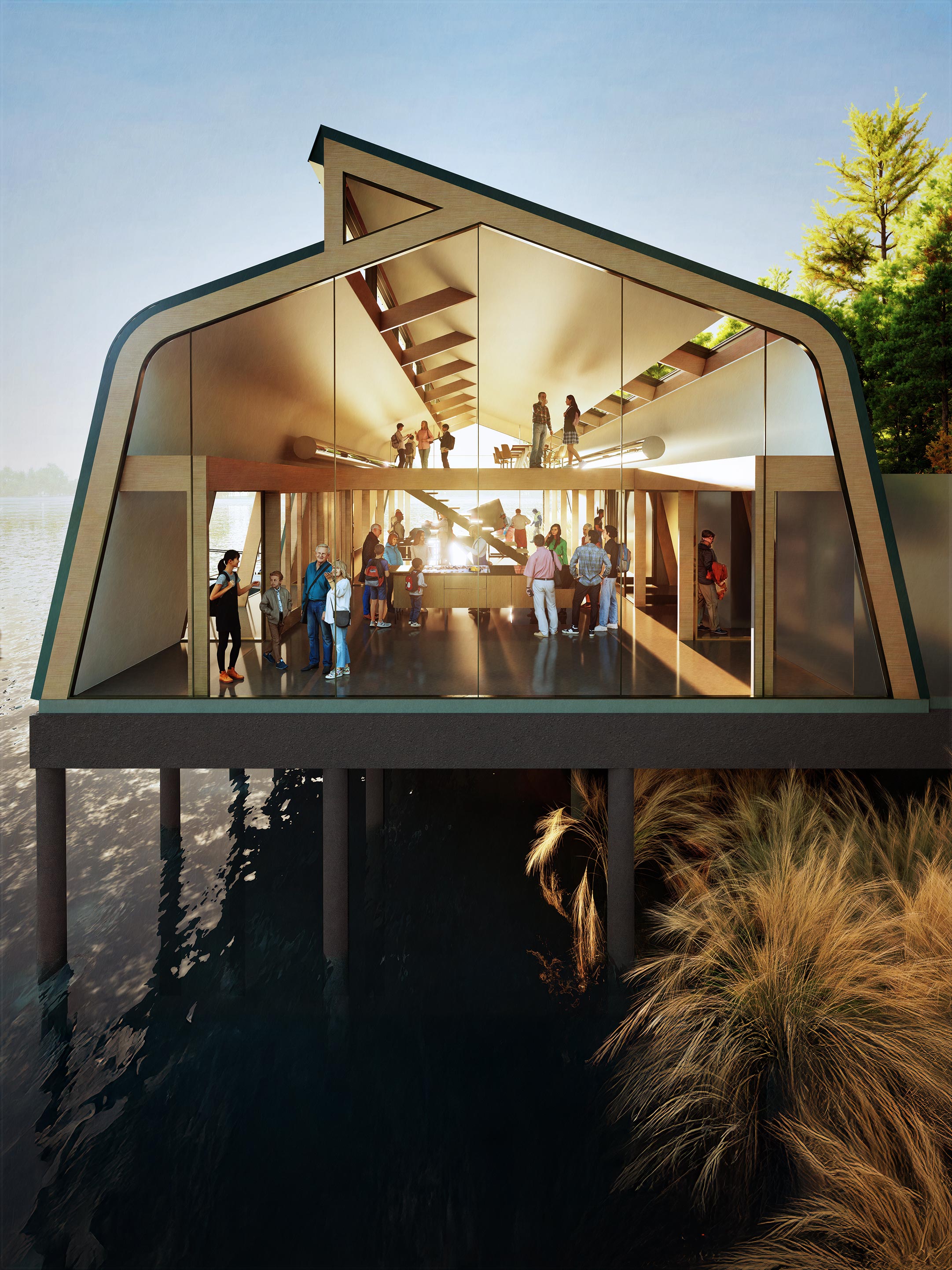
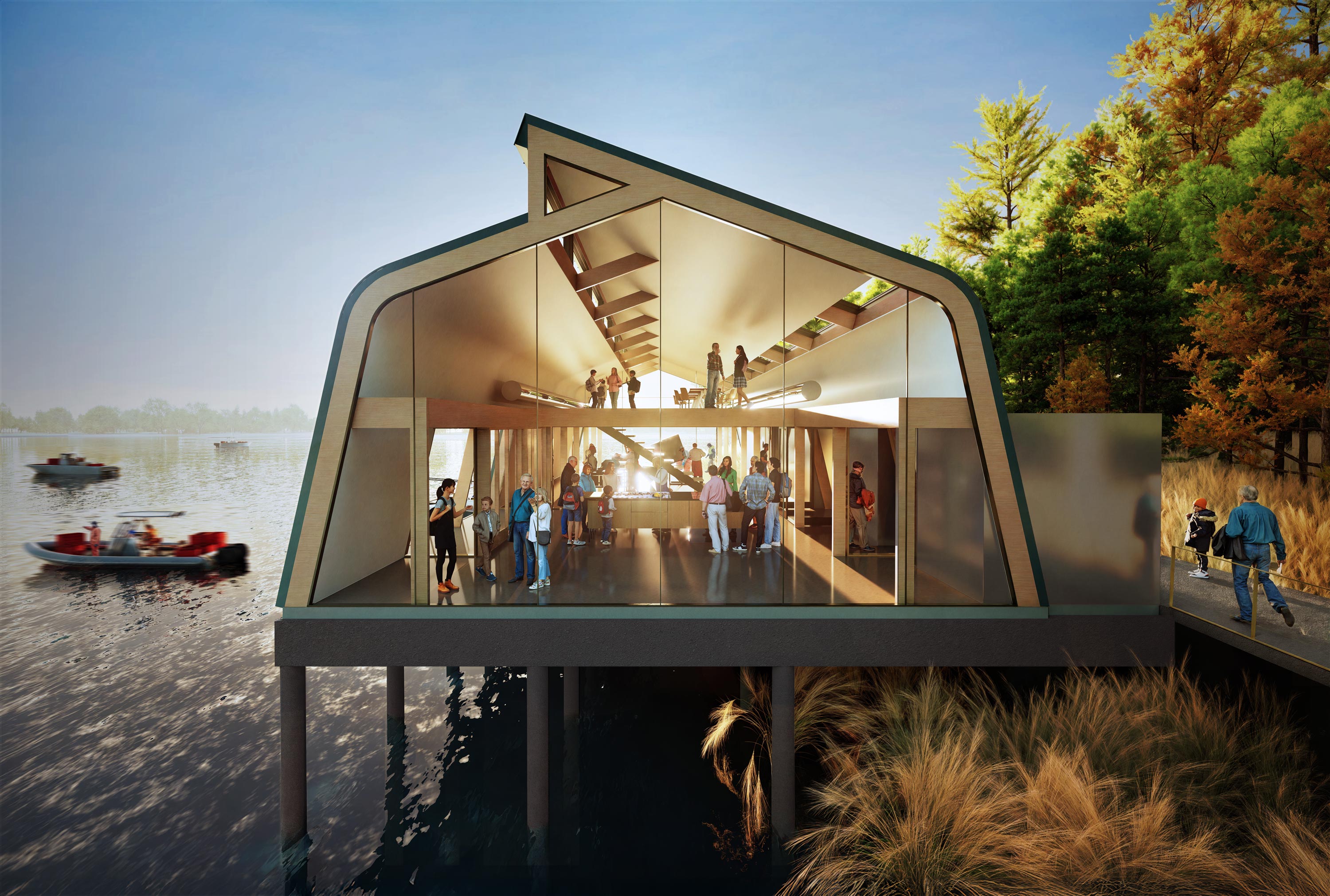
The Marine Longhouse maintains a minimal footprint while establishing a presence on the waterfront. Designed for compact urban harbors and rural tidal estuaries, the longhouse accommodates pile and pier foundations for coastal soils and tidal flood zones. North and South elevations feature insulated standing seam metal panels that extend the hull’s length, forming an envelope planned to be durable, resistant to salt-air and coastal humidity. Panels are factory-assembled composite units — metal face sheet over rigid insulation core — delivering continuous thermal performance, integral air and vapor barrier, and a durable, low-maintenance exterior surface rated for coastal salt-air environments. This thermal shell is punctuated by glazed doors and windows, a ribbon of skylights, and north-facing operable clerestory windows, just below the roof ridge to admit natural light without disrupting the operational wall beneath. At either end, full-height glazed walls provide unobstructed waterfront views, effectively merging the interior environment with dock and estuary.
LONGHOUSE STRUCTURE
The structural system is fully expressed at the longhouse interior, forming an organizing intelligence for the building: a repeating clear-span mass timber frame, delivering an unobstructed interior environment that can be subdivided or integrated as operations require. Prefabricated offsite, delivered numbered and ready for crane-assisted assembly.
PRIMARY WORKING FLOOR
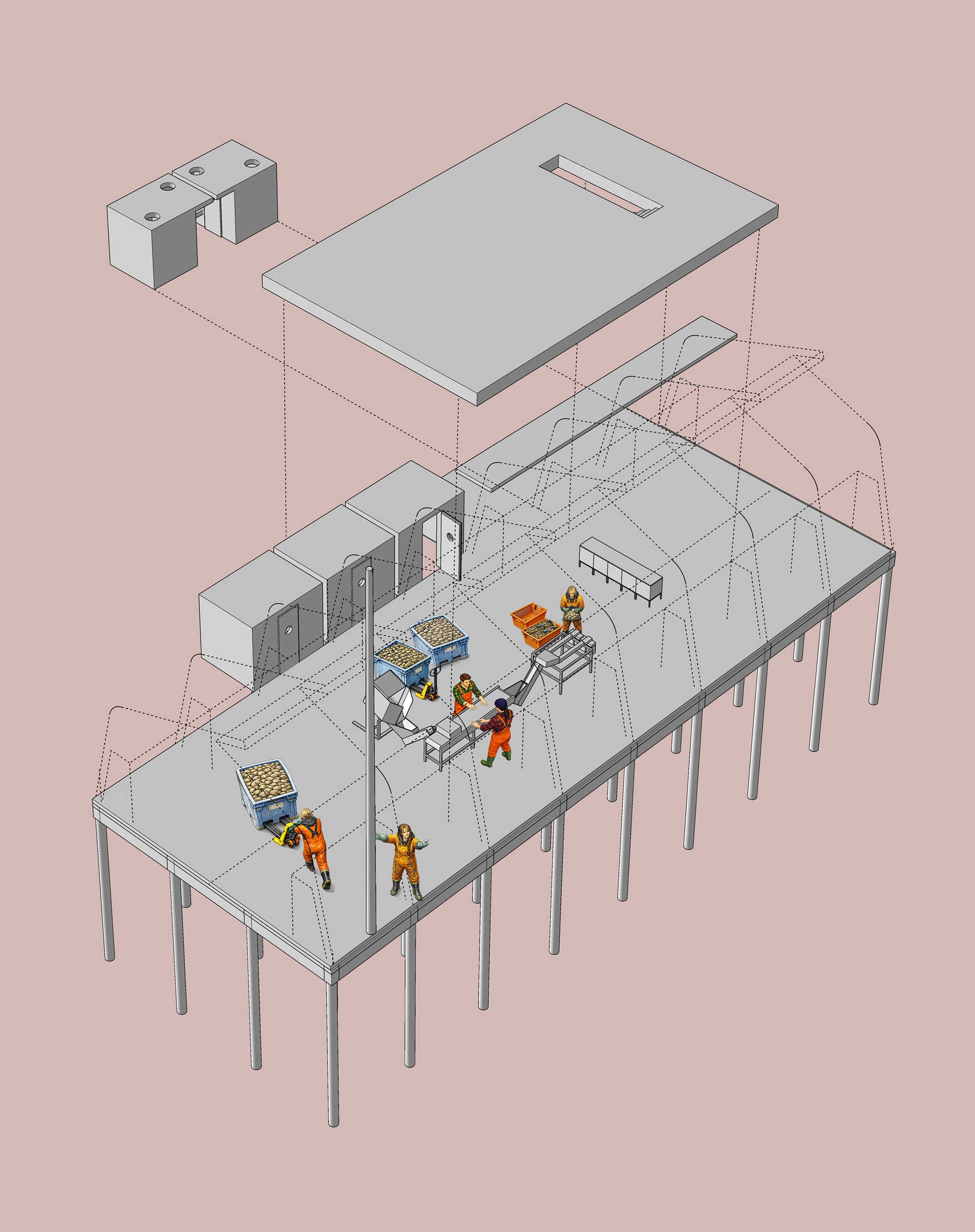
The primary working floor is the building’s engine, functioning as the core operational zone: hygienic, suitable for food processing, and equipped for all phases of aquaculture harvest. Aquaculture processing bays occupy much of the floor plate: food-safe, seamless, washable surfaces; stainless floor drains; marine-grade utility connections meeting HACCP, FDA, and state shellfish sanitation standards.
MEZZANINE FLOOR PLATE
A prefabricated mezzanine establishes an elevated workspace and communal area above the chilled processing space below. This mezzanine serves as both a thermal and spatial device: it confines climate control to essential areas while maximizing utility and space above. An open, prefabricated ship’s stair ensures connectivity between levels, reinforcing the building’s cohesive design.
SUPPORT MODULES
Prefabricated mechanical, utility, refrigeration and bath modules are introduced as discrete finished units, delivered to the site and connected to main supply and waste lines upon arrival, each module replaceable and upgradeable, independent of the primary structure. Prefabricated cold storage modules are planned to be accessible from both the processing floor and the exterior dock, supporting use around the clock.
LONGHOUSE STRUCTURE
The structural system is fully expressed at the longhouse interior, forming an organizing intelligence for the building: a repeating clear-span mass timber frame, delivering an unobstructed interior environment that can be subdivided or integrated as operations require. Prefabricated offsite, delivered numbered and ready for crane-assisted assembly.
PRIMARY WORKING FLOOR
The primary working floor is the building’s engine, functioning as the core operational zone: hygienic, suitable for food processing, and equipped for all phases of aquaculture harvest. Aquaculture processing bays occupy much of the floor plate: food-safe, seamless, washable surfaces; stainless floor drains; marine-grade utility connections meeting HACCP, FDA, and state shellfish sanitation standards.
MEZZANINE FLOOR PLATE
A prefabricated mezzanine establishes an elevated workspace and communal area above the chilled processing space below. This mezzanine serves as both a thermal and spatial device: it confines climate control to essential areas while maximizing utility and space above. An open, prefabricated ship’s stair ensures connectivity between levels, reinforcing the building’s cohesive design.
SUPPORT MODULES
Prefabricated mechanical, utility, refrigeration and bath modules are introduced as discrete finished units, delivered to the site and connected to main supply and waste lines upon arrival, each module replaceable and upgradeable, independent of the primary structure. Prefabricated cold storage modules are planned to be accessible from both the processing floor and the exterior dock, supporting use around the clock.
PROGRAM
The facility comprises approximately 3,000 sq ft organized into four primary zones:
- Two aquaculture processing bays equipped with food-safe, seamless, washable surfaces, stainless steel drains, and marine-grade utility connections that adhere to local and national sanitation standards. This includes a cold processing area and equipment to clean, count, sort, and bag harvests at temperature.
- Cold storage modules designed for cooperative use, accessible independently from both the processing bays and the exterior dock, ensuring access for tenants and shippers operating on varied schedules.
- Shared support zones, including storage, wash-down facilities, restrooms, and food preparation areas.
- Multipurpose gathering areas for workforce training, education and outreach.
EQUIPMENT
This iteration of the longhouse equipment profile includes a processing bay cooled below 50-degrees Fahrenheit to ensure a safe aquaculture environment. Equipment therein includes:
- Hydraulic tote tipper, upward feed conveyor, and washer equipped with a recycled water system.
- Manual and automated sorting lines designed to enhance both efficiency and worker safety.
- Counting and bagging systems designed for standardized packaging.
WORKING MODEL
The Marine Longhouse model supports the advancement of marine sector infrastructure by combining research and development, business incubation, testing, and processing within one cohesive environment. Engineered as a laboratory for marine technology innovation, the facility actively promotes progress across the industry.
PROGRAM
The facility comprises approximately 3,000 square feet organized into four primary zones:
- Two aquaculture processing bays equipped with food-safe, seamless, washable surfaces, stainless steel drains, and marine-grade utility connections that adhere to local and national sanitation standards. This includes a cold processing area and equipment to clean, count, sort, and bag harvests at temperature.
- Cold storage modules designed for cooperative use, accessible independently from both the processing bays and the exterior dock, ensuring access for tenants and shippers operating on varied schedules.
- Shared support zones, including storage, wash-down facilities, restrooms, and food preparation areas.
- Multipurpose gathering areas for workforce training, education and outreach.
EQUIPMENT
This iteration of the longhouse equipment profile includes a processing bay cooled below 50-degrees F to ensure a safe aquaculture environment. Equipment therein includes:
- Hydraulic tote tipper, upward feed conveyor, and washer equipped with a recycled water system.
- Manual and automated sorting lines designed to enhance both efficiency and worker safety.
- Counting and bagging systems designed for standardized packaging.
WORKING MODEL
The Marine Longhouse model supports the advancement of marine sector infrastructure by combining research and development, business incubation, testing, and processing within one cohesive environment. Engineered as a laboratory for marine technology innovation, the facility actively promotes progress across the industry.
PROJECT TEAM
Working Group 1
© copyright 2026 Working Group 1
Drawings and documents generated by our firm are proprietary, and the copyright is held by Working Group 1. The drawings and documents related to this project cannot be used, copied, loaned, or assigned for development or for any other purpose without express written permission from Working Group 1.
All Rights Reserved.
Photos: Thomas Henninger